

In development · Early access opening to Bay Area fleets
HaulCore: the whole hauling business on one platform.
A multi-tenant operations platform for dump-truck and aggregate hauling: dispatch, tickets, invoicing, payroll, general ledger and fleet in one system, built for yards that run on older desktop software, spreadsheets and paper tickets.
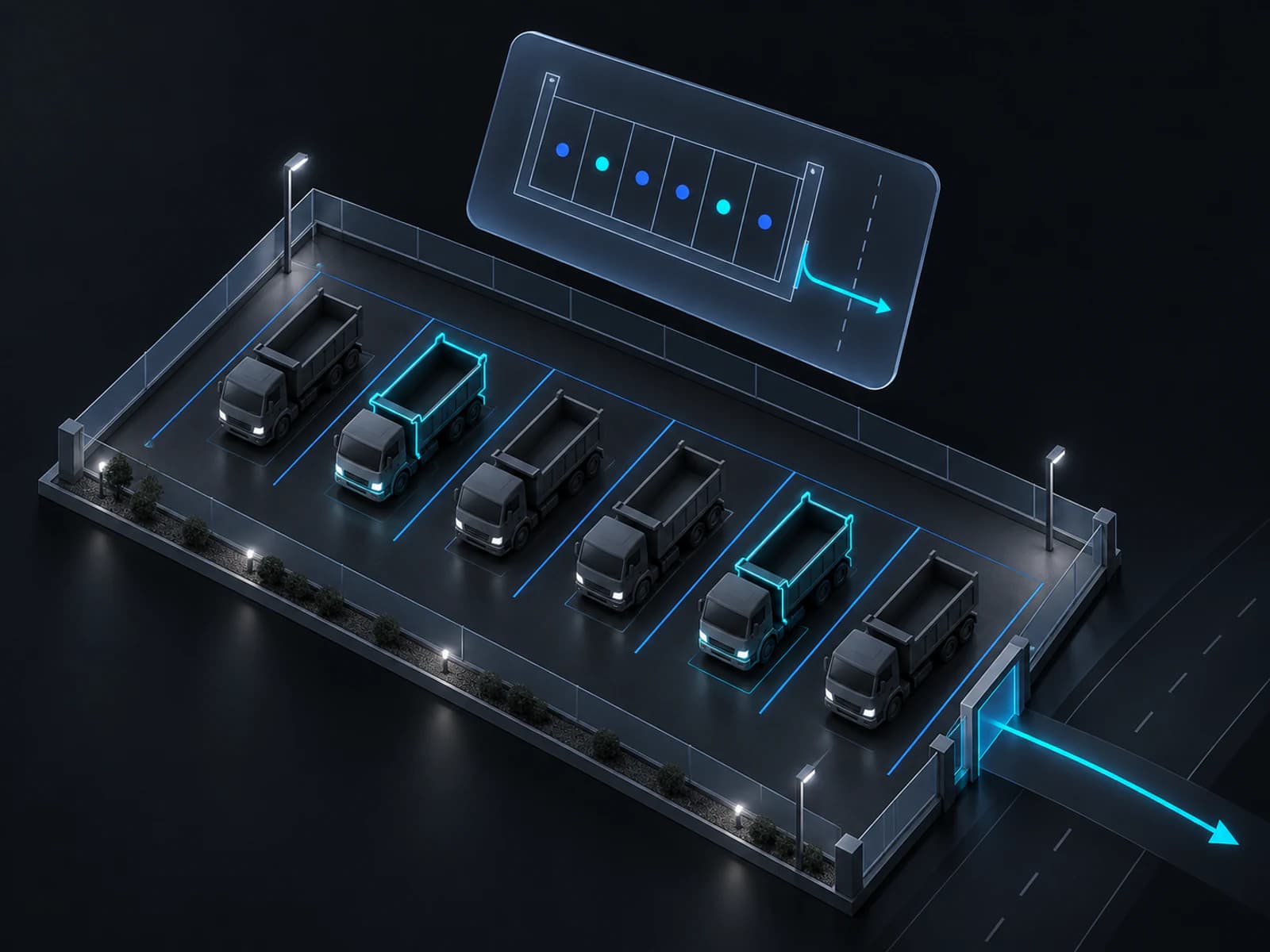

A hauling day, end to end
Yard, dispatch, exception, invoice, handoff.
The chain every load runs through, and the order HaulCore is being built in. One record carries the load from the yard to the ledger, so nothing is retyped between stations — and the station that goes wrong gets a person, not a spreadsheet.
Yard visibility
The morning starts from what's really in the yard.
Every unit, whether it can go out, and what's due on it — maintenance, inspections, compliance dates — instead of the whiteboard by the door.
The record it leaves
Unit status, maintenance due and compliance, per truck.
Dispatch
Trucks, drivers, jobs and rates on one board.
Assignments, materials, destinations and availability. Work that didn't go out today carries forward rather than falling off the bottom of a sheet.
The record it leaves
The job, the truck, the driver and the agreed rate.
Exception
When a ticket doesn't price, someone owns it.
A ticket that doesn't price, an invoice that doesn't reconcile, a pay line that doesn't add up — each becomes a piece of work with a person's name on it. Erica does the first pass; a person closes it.
The record it leaves
Who owned the exception, and how it was resolved.
Invoice
The ticket becomes the invoice, and the ledger moves.
Prices are calculated on the server, not in a spreadsheet. Invoices, short pays and statements post to the general ledger as they happen, not at month end.
The record it leaves
A ledger posting traced to the ticket it came from.
Accountable handoff
The customer and the office hold the same record.
Customers see their own tickets, invoices and statements, and raise a question against the ticket it concerns. Driver pay and certified-payroll records come from the same loads.
The record it leaves
One chain from load to ledger, with an audit trail over it.
What is in it
One system, from the load to the ledger.
Hauling runs on a chain that usually spans four systems and a spreadsheet: the job, the ticket, the invoice and the pay run. HaulCore holds the whole chain, so a number entered once is the number everywhere.
In development. This is the scope being built. Modules land in order of what early-access yards need first — talk to us if you want a say in that order.
Yard visibility
- Fleet
- Units, maintenance and preventive schedules, fuel imports, odometers, compliance and per-unit profit and loss.
Dispatch
- Dispatch and jobs
- Boards, assignments, materials, destinations, rates and availability — with work that did not go out today carried forward rather than lost.
- Email and SMS
- Templates, suppression lists, delivery webhooks and a queue, so a failed send is a visible event rather than a silent one.
Exception
- Tickets
- Ticket entry with the price calculated on the server, not in a spreadsheet. Exceptions are flagged and worked, not discovered at month end.
- Identity and audit
- Per-person staff accounts with MFA, per-tenant configuration, and an audit trail over the things money moves through.
Invoice
- Invoicing and AR
- Invoices, payments, short pays, statements, settlements and charge lines, each posting to the ledger as it happens.
- General ledger
- Accounts, journals, posting rules, reconciliation, reporting and exports — a real ledger, not a report generated over invoices.
- Documents
- Versioned and encrypted, virus-scanned on the way in, with retention rules and legal holds. Scanned tickets get thumbnails you can actually read.
Accountable handoff
- Customer portal
- Your customers see their own invoices, statements and tickets, and raise a question against the ticket it concerns.
- Payroll
- Pay runs, driver pay, advances, deductions, garnishments and versioned tax tables, with the records certified payroll asks for.
Who it is for
For yards whose software has not kept up.
Dump trucks, aggregate, material hauling and demolition: operations where the paperwork is the product, and drivers, dispatch and the office all need the same record.
- You are running an older desktop system that works and that nobody wants to touch
- Dispatch is a whiteboard and a phone, and the office finds out what happened afterwards
- Tickets are retyped at least once between the yard and the invoice
- Payroll and the ledger live in a different system from the work that generated them
- You run more than one entity, and each one needed its own copy of everything
How it is built
Boring where it matters.
A NestJS API, React portals for staff and customers, background workers for the long jobs, and PostgreSQL underneath. Documents live in object storage, are virus-scanned on the way in, and are encrypted at rest. It ships as containers behind Caddy, with backup, restore and observability designed in rather than added later.
The data model is tenant-aware from the bottom up, which is the part that is expensive to retrofit and cheap to build in: multiple entities on one deployment, with no shared rows and no per-customer fork of the codebase.
Exceptions are built in from the start. A ticket that does not price, an invoice that does not reconcile or a pay line that does not add up becomes a piece of work with someone's name on it. Erica does the first pass, and a person closes it.
Questions
What yard owners ask first
Can I use HaulCore today?
Not yet in full. HaulCore is in development and early access is opening to Bay Area fleets. Modules land in the order early-access yards need them first, and those yards help decide that order.
What would it replace?
The chain that usually spans four systems and a spreadsheet: the job, the ticket, the invoice and the pay run. HaulCore holds the whole chain, so a number entered once is the number everywhere.
Who is it built for?
Dump-truck, aggregate, material hauling and demolition operations, where the paperwork is the product and drivers, dispatch and the office all need the same record.
Can I run more than one company on it?
Yes, that is designed in. The data model is tenant-aware from the bottom up: multiple entities on one deployment, with no shared rows and no per-customer copy of the code.
Where does AI come in?
In the exceptions. A ticket that does not price, an invoice that does not reconcile or a pay line that does not add up becomes a piece of work with someone's name on it. Erica does the first pass, and a person closes it.
Start here
Want early access?
HaulCore is in development. Early-access yards see each module as it lands and help decide which ones ship first. Tell us how your yard runs today and we will tell you where it fits.
- Fixed quote before any work
- Most sites live in 14 days
- You own the code and the data
- A person replies within one business day